Maya Symposium
(February 24 - 26, 2012)
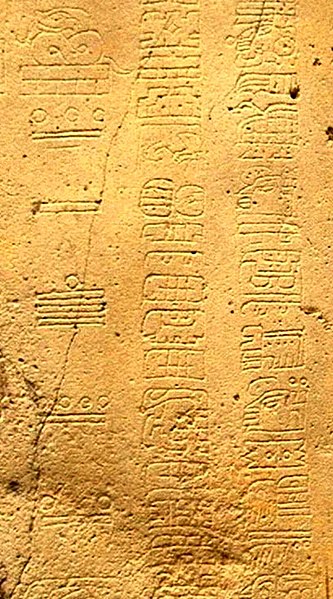
This year’s Maya Symposium incorporated a wide variety of specialties (such as epigraphy, archaeology, and art history) in order to explore the great cities and states of the Maya civilization. The speaker series consisted of talks about different baktuns.
The event began with Anthony Aveni, keynote speaker, on Friday, February 24, 2012, at the New Orleans Museum of Art. Since we attended the 2011 UT Maya Meetings, his Maya Apocalypse Soon? presentation was simply a refresher: no, the world is not ending in 2012!
The following day, February 25, 2012, was the series of speakers with their presentations of the baktuns. David Stuart introduced the concept of foundational time: the timeframe during which Maya history is anchored (this term can be used to avoid claiming whether something is mythology or history). The Maya had a habit of telescoping and collapsing in their written records: their history travels into the deep mythological past, incorporates the historical “present”, and jumps into the deep future.
Maya history begins during the 7th cycle. Patricia McAnany presented when material signatures originated. She also pointed out that all Maya rulers most likely did not employ the Long Count yet. Solar tracking, centralizing ancestors, scalable cyclical architecture, and creation narratives in cave portals characterize the exuberant 7th cycle. The preclassic was made possible by collective action – the people were united. It would seem that organized leadership became a necessity for creating and maintaining monumental structures. Rulers appear and fall.
With the collapse of El Mirador, Tikal rises as a super power. Kathryn Reese-Taylor discussed a possible Teotihuacan invasion of Maya territory during the 8th cycle. By the 9th cycle, as Marc Zender noted, Mesoamerica was full of texts; most of which are inaccessible, highly specific, and terse. The Maya style is multivocal, impersonal, and self-referential in nature. And just as texts became more prominent, transitions and transformations began yet again. Prudence Rice discussed where the Itza could have possibly come from and how their migration changed the Maya lifestyle during the 10th cycle.
The Itza may have influenced Mayapan, the last Maya capital in Mexico, according to Susan Milbrath during her presentation of Cycle 11. It is a clear an ideological battle took place: religious foreign cults were growing, the Cocom and Puuc did not get along, and Aztec influence was greater than ever. During Cycle 12 (presented by Laura Caso), cacao and vanilla united the remaining free Maya during the Spanish conquest. It was not until 1697 that the Spanish invaded the last independent Maya settlement.
The Maya did not disappear though. Judith Maxwell did an incredible job of presenting the last 400 years of Maya history. Despite the Spanish conquest, caste wars, persecution, genocide, and more, the Maya are relearning “how to be Maya.” They still have Maya dances, they are being taught how to read glyphs, and education is now available in Mayan. In 1985, the constitution of Guatemala finally stated that “the Maya have the right to exist.” During this last baktun of the Long Count, the Maya are now in the eve of a new Maya dawn.
This year’s Maya Symposium incorporated a wide variety of specialties (such as epigraphy, archaeology, and art history) in order to explore the great cities and states of the Maya civilization. The speaker series consisted of talks about different baktuns.
The event began with Anthony Aveni, keynote speaker, on Friday, February 24, 2012, at the New Orleans Museum of Art. Since we attended the 2011 UT Maya Meetings, his Maya Apocalypse Soon? presentation was simply a refresher: no, the world is not ending in 2012!
The following day, February 25, 2012, was the series of speakers with their presentations of the baktuns. David Stuart introduced the concept of foundational time: the timeframe during which Maya history is anchored (this term can be used to avoid claiming whether something is mythology or history). The Maya had a habit of telescoping and collapsing in their written records: their history travels into the deep mythological past, incorporates the historical “present”, and jumps into the deep future.
Maya history begins during the 7th cycle. Patricia McAnany presented when material signatures originated. She also pointed out that all Maya rulers most likely did not employ the Long Count yet. Solar tracking, centralizing ancestors, scalable cyclical architecture, and creation narratives in cave portals characterize the exuberant 7th cycle. The preclassic was made possible by collective action – the people were united. It would seem that organized leadership became a necessity for creating and maintaining monumental structures. Rulers appear and fall.
With the collapse of El Mirador, Tikal rises as a super power. Kathryn Reese-Taylor discussed a possible Teotihuacan invasion of Maya territory during the 8th cycle. By the 9th cycle, as Marc Zender noted, Mesoamerica was full of texts; most of which are inaccessible, highly specific, and terse. The Maya style is multivocal, impersonal, and self-referential in nature. And just as texts became more prominent, transitions and transformations began yet again. Prudence Rice discussed where the Itza could have possibly come from and how their migration changed the Maya lifestyle during the 10th cycle.
The Itza may have influenced Mayapan, the last Maya capital in Mexico, according to Susan Milbrath during her presentation of Cycle 11. It is a clear an ideological battle took place: religious foreign cults were growing, the Cocom and Puuc did not get along, and Aztec influence was greater than ever. During Cycle 12 (presented by Laura Caso), cacao and vanilla united the remaining free Maya during the Spanish conquest. It was not until 1697 that the Spanish invaded the last independent Maya settlement.
The Maya did not disappear though. Judith Maxwell did an incredible job of presenting the last 400 years of Maya history. Despite the Spanish conquest, caste wars, persecution, genocide, and more, the Maya are relearning “how to be Maya.” They still have Maya dances, they are being taught how to read glyphs, and education is now available in Mayan. In 1985, the constitution of Guatemala finally stated that “the Maya have the right to exist.” During this last baktun of the Long Count, the Maya are now in the eve of a new Maya dawn.
“Let us celebrate a new beginning; the future depends on us, not the stars.”
If you would like to read summaries about each individual talk, leave a comment below and we will get to work!

About the Author
I'm Melanie, the founder of BermudaQuest and an archaeology undergraduate at the University of New Mexico. I love writing about ancient and modern cultures. My goal is to make information about our origins available to everyone [in simple English!]