Showing posts with label Mounds. Show all posts

Ancient Oklahoma

on 19 April 2013

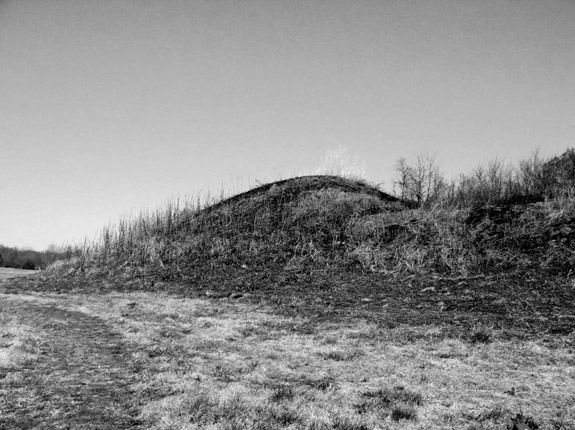
The Spiro Mounds of Oklahoma are only a few miles away from the city Spiro. The mound site consists of 12 mounds, an elite village, and a support village within 150 acres of land. Originally in prehistoric times the mounds area was home mostly to nomads, but as cultures and society began to emerge when ancient people began to become sedentary the Spiro Mounds also transformed into what they are today. By 800 BCE the Spiro Mounds became a permanent settlement that was used until 1450 BCE.

Heironymous Rowe, commons.wikimedia.org,  CC BY-SA 3.0

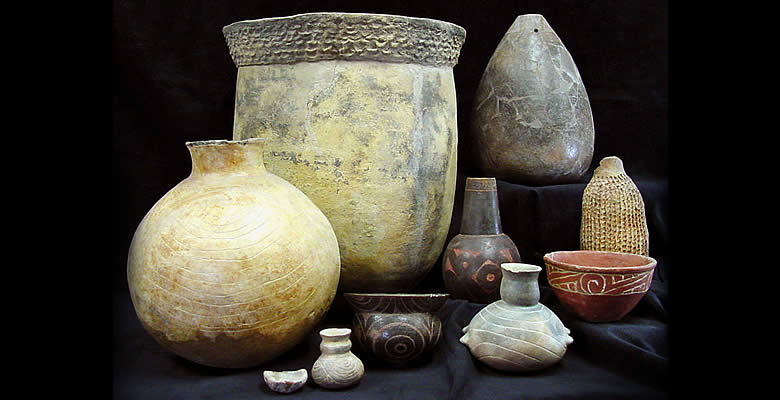
Heironymous Rowe, commons.wikimedia.org, CC BY-SA 3.0
During that time period, which is typically called the Mississippian period the Spiro culture flourished. Archaeological evidence shows that Spiro culture had economic, political, and religious all the way from the Great Lakes to the east coast and the Gulf of Mexico to the Gulf of California. They had an extensive religious center developed as well as a highly developed trade network. The Spiro political system was also able to exert total control over the entire South East. In its height the Spiro people shared an iconographic writing system with over 60 other tribes along with horticulture and extensive ceremonies.

No one is certain as to why the Spiro Mounds were abandoned or why the culture declined, but it was probably caused by a number of environmental, cultural, and political factors. Today the Spiro Mounds are available for the public to explore and at the Spiro Mounds Archaeological Center many artifacts including artistic and utilitarian prehistoric Native American artifacts.

To Find Out More Check Out: http://www.okhistory.org/sites/spiromounds

The Lost Culture of the Mississippian Floodplain

on 06 August 2012

Before Columbus, one of the largest and sophisticated cities of America, rivaling even some of the largest cities in Europe, thrived on the floodplain of the Mississippi. This powerful culture influenced surrounding ones from the Great Lakes to the Gulf of Mexico. And then, suddenly, they all disappeared.

Entering the Cahokia Mounds State Historic Site, viewing Monk's Mound
[Northfielder/Flickr]

During the Mississippian period (800-1400 CE), Cahokia, located in southwest Illinois (just outside of St. Louis), had around 120 mounds which covered nearly 1,600 hectares. This is the largest pre-Columbian archaeological site in North America north of central Mexico, as well as the earliest. According to UNESCO, Cahokia is an exceptional example of pre-urban structuring. Also, "it is the pre-eminent example of a cultural, religious, and economic center of the prehistoric Mississippian cultural tradition." The size and layout of this pre-urban society is evidence of the powerful political and economic system that was in place, which can be held responsible for organization of labor, trade, and agriculture.

Cahokia was larger than London in 1250 CE. The Mississippians built a variety of structures: from practical homes to monumental public works that still remain. The agricultural society may have had a population of 10,000 - 20,000 at its peak (1050-1150 CE). And though this culture left us no writing, we have mounds.


Meet the Mounds


What They're Made Of


The Cahokia used earth and wood for their architecture. Examples of this can be seen in their mounds and in their homes. Wooden palisades encompassed many zones which were possibly defensive enclosures; this is seen at Monk's Mound and the entire central section of the site. Red ochre was found in postholes which may suggest that ochre was used as paint.

Monk's Mound & The American Woodhenge


Monk's Mound is the largest prehistoric earthwork in the Americas. It covers over 5 hectares and is 30 meters tall. This mound is where the leader of the community resided. In the early 1960s, Dr. Warren Wittry discovered a series of large oval-shaped pits, which later revealed fragments of red cedar (considered a sacred wood) that served as posts. Dr. Wittry named this Woodhenge. The posts mark the sunrises during the equinoxes with the front of Monk's Mound.

Monk's Mound
[reallyboring/Flickr]
Woodhenge
[Nathaniel Paluga (Drpaluga)/Wikimedia Commons CC-BY-SA 3.0]


Fox Mound & Round Top


The mounds known as Fox Mound and Round Top (also known as Moorehead's Mound) seem to have been joined by a platform (though, it's equally possible the mounds blended together over time). Fox Mound, at 14 meters tall, is a flat-top platform mound that has never been excavated. It's companion, Round Top, is a true conical mound about 13.4 meters tall which is also untouched. These two mounds retain much of their original forms today.

Fox Mound
[Lance and Erin/Flickr]
Round Top
[Lance and Erin/Flickr]
Fox Mound (left) and Round Top (right) as seen from the top of Monk's Mound
[jmehre/Flickr]

The Site Outskirts


Around the edges of the site lie the remains of resential quarters, areas for specialized activity, and public ceremonial areas. The living areas had small gardens, but the agricultural lands are found beyond the city-limits as well as small satelitte villages.

A diorama showing a Mississippian potter [LEFT] and woman grinding maize with a stone mortar [RIGHT],
from the Cahokia site museum.
[Herb Rose/Wikimedia Commons CC-BY-SA 3.0]


The Mystery of Cahokia

Where did the people of Cahokia go? Did other tribes absorb them? Did they create new tribes? Many questions remain unanswered about the Cahokians. The decline of their civilization may have begun around 1200 CE - we know that by the 1400s they were gone. Perhaps they depeleted their resources and were forced to move...war may have struck...maybe it was a disease. Political and economic power may have declined. We know they were a thriving community that made significant advances in astronomy, agriculture, and economics which probably spurred development in other regions of America.


Cahokia Today

Despite the four lane road that runs cuts through the site, Cahokia Mounds is one of eight cultural World Heritage sites in the United States. Ten miles away, only one mound remains. About 890 of the 1600 hectare site is protected. Of the 120 mounds, 109 have been recorded and 68 of those lie within the protective range of Cahokia Mounds State Historic Site. The rest lies under urbanization. Few know of the existence of Cahokia outside of St. Louis, IL. We may only see piles of dirt, but these piles of dirt tell one of the oldest stories of our American heritage.


For Further Reading


Cahokia Mounds State Historic Site :: www.cahokiamounds.org
Cahokia, America's Forgotten City (National Geographic) :: ngm.nationalgeographic.com
UNESCO Cahokia Mounds :: whc.unesco.org

Caddoan Mounds - Facts and Mystery

on 17 January 2012

Table courtesy Wikipedia
[Heironymous Rowe/Alexrk]
The prehistoric Caddo Indian culture existed in the open prairie 1,200 years ago. These people built ceremonial, temple, and burial mounds. Three large mounds still stand in East Texas.

The Caddo people grew corn, hunted and fished, and also collected wild plants for food. There is evidence of trade with other hunter-gatherers in the area. Also, it seems they shared many cultural traits and traditions of the Midwest and Southeast Mississippian cultures - the most prominent shared trait is mound building. This particular group of Caddo Indians, known as Hasinai, built their village and ceremonial center 26 miles west of Nacognoches. The Caddoan Mounds site is the southwestern-most cere-monial site of the mound building culture.

Mound builders inhabited the North American woodlands for more than 2,500 years. This particular 397-acre site holds many secrets. Archae-ologists do not know how many people lived here. Artifacts are scare so it is possible that the houses and other structures were occupied only for a short period of time.

The Site

Around A.D. 800, the Caddo selected this site as a permanent settlement and dominated the area for about 500 years. The village of forty houses surrounded the largest and southernmost mound (Mound A). Mound A is rectangular and appears to be the most significant of the three. The second mound (Mound B) is also rectangular and is located at the center of the State park. Mound B had a flat top and "broad earthen ramps on the north, east, and west sides" (Texas Native Skies, 2004). Mound C is the third and northernmost mound was used a ceremonial burial center.


What are the mounds? How were they built?

How were these mounds built? Well, to begin, the earthen mounds were special places where their leaders and priests lived. Some mounds were platforms, such as Mound B, that elevated grass-thatched temples for special rituals. Mounds were formed by workers that carried soil from quarry pits. Burial mounds contain soil and the sacred dead of the Caddo people. Ceremonial and temple mounds contain layers of burnt temples. After the death of a leader or priest, the temple and home of the individual was burned down, a layer of soil was added, and a new structure was built on top for the next leader or priest. The dead leader or priest was then buried in the burial mound and a period of rituals, mourning, and feasting began. At other sites, "archaeologists suspect servants and perhaps even family members were sacrificed and buried alongside the powerful leader to honor his (or sometimes her) death" (Mounds of Mystery).

Burial mound, Jennifer L. Price (Caddo Mounds site manager)
Over the years, mounds grew and grew as leaders died, priests died, new temples were built, etc etc. The largest now appear to be hills and can be mistaken by an untrained eye. What gives them away is their shape. Hills generally are not naturally rectangular or symmetrically circular.

Astronomy and Agricultural People

Mounds could have other functions. It is not unlikely that they served as observatories, "escape from flood water, and refuge from fierce storms" (Mark D. Lacy). They do have astronomical significance. For example, the Hopewell Serpent Mound in Ohio aligns with the sunrise and sunset of the equinoxes and solstices. "Platform mounds at Caddoan Mounds likely were aligned with stars or equinoxes, according to archaeologists, although they have not yet determined the exact alignments" (Texas Native Skies, 2004). For example, Mound B is aligned due north-south. This means it was most likely aligned with the north celestial star at the time of occupation. [Earth wobbles on its axis, therefore North stars change over time. Polaris has only been the North star for a few hundred years.] Also, houses at the site follow a pattern, much like the village pattern of the Pawnee -- this may mean houses were aligned with a certain star group or the mound building culture followed a default orientation pattern like Maya sites (most are aligned north with sun temples facing west so the sun would rise directly behind them).

Art

The Caddo made beautiful pottery. They used elaborate decorative patterns on pots. The Spanish left descriptions about Caddo wood carvings. Lucky for us since wood decays rapidly. In their descriptions, the Spanish write about wooden bowls, chests. chairs, beds, even bows and arrows. They even carved masks. Most of the relics that have survived are located in the Caddo Mounds' museum; there is a collection of about 200 prehistoric artifacts that date between A.D. 750 - 1400.

Caddoan pottery, Texas Beyond History
Where did the Caddo people go?

The Caddo Mounds settlement flourished until the 13th century. The site was abandoned. "Most archaeologists agree that the elite ruling class left the Caddo Mounds after loss of their regional influence, as outlying hamlets and trade groups became self-sufficient and grew less dependent on the cultural center in religious and political matters" (Texas Historical Commission). There is no evidence of war as the cause of abandonment. The Hasinai Caddo groups still lived in the area through the 1830s. By 1855, all 1,059 Caddo people were removed to the Washita River. Conflicts with the white colonizers arose once again and they were forced to flee to Indian territory in southern Oklahoma.

As you may well know from your US History classes, the Native Americans of East Texas were peaceful farmers. As we've chosen to call them, they are the NATIVE Americans that were attacked, stolen from, ripped from their land, and relocated into reservations. White settlers forced these people to abandon their homes, daily lifestyle, and rituals. Now, archaeologists face the "mystery" of their ancestors. Farming, road construction, and grave robbers have destroyed countless sites that could have explained who these ancient mound builders were. Today, Caddo Mounds State Historic Site is protected by archaeologists, Caddo people, and state officials who work together to preserve and study the remains of the sites still "standing."

Image taken by Texas Heritage Cycling Experience, 2005
The Caddo continue to live in western Oklahoma today, primarily near the Caddo Nation Headquarters outside Binger, Oklahoma.

References/Recommended Reading
"Caddo Mounds." Texas Native Skies. University of Texas, 2004. 
"Caddo Pottery Tradition, The." Texas Beyond History, 2003.
Hawkes, Logan and Carla Land. "Caddo Mounds Historical Park." WinterTexans Online.
Lacy, Mark D. "Caddoan Mounds." Terra Incognita. Houston Culture.
Moore, R. Edward. Caddo Cultures in Texas. Texarch Associates, 2001.
"Mounds of History." Texas Beyond History.
Texas Historical Commission. "Caddo Mounds." Texas Historical Commission, 2011.


Profile-photo
About the Author


I'm Melanie, the founder of BermudaQuest and an archaeology undergraduate at the University of New Mexico. I love writing about ancient and modern cultures. My goal is to make information about our origins available to everyone [in simple English!]

Share This

Never miss an article, subscribe here!

Credits & Policies

Banner created by Melanie Magdalena.

Images courtesy of: Ricardo Liberato (Pyramids of Giza), Aurbina (Moai), Maria Reiche (Nazca), Zunkir (Gobekli Tepe), Bjorn Christian Torrissen (Chichen Itza), Gareth Wiscombe (Stonehenge).

Images were released to the public and/or licensed under Creative Commons.

Editor's Note

Welcome to BermudaQuest, a free online journal primarily about Archaeology, Ancient History, and stories about different cultures from around the world.

Founded by Melanie E Magdalena, BermudaQuest and Origins (our magazine) have over a million readers! We would love to include your insight, experience, photos, and thoughts about your culture, heritage, and travels. Make sure you check out Origins, with over 4 million readers!