Showing posts with label Africa. Show all posts

Table Mountain National Park

on 19 July 2013

Main attractions within Table Mountain National Park


Table Mountain National Park, which is found in the popular tourist city of Cape Town, South Africa, is a national heritage site and is haven of beautiful natural landscapes and attractions. The Table Mountain National Park offers a number of beautiful hikes and walks for visitors to enjoy and is home to many of Cape Town’s must-visit attractions.

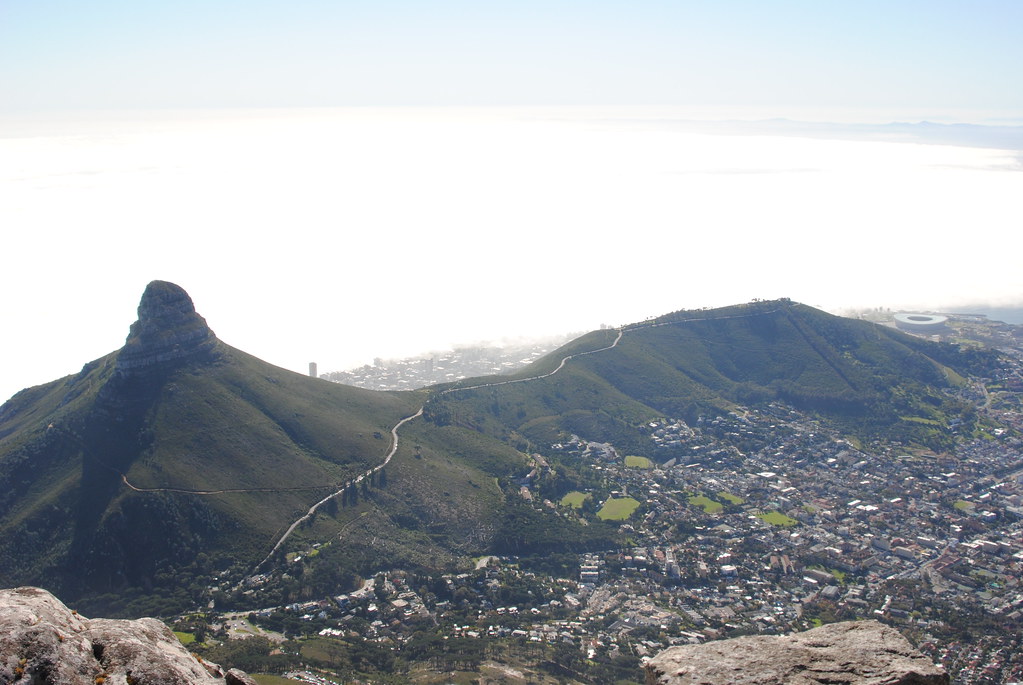
Photo of Table Mountain by George M Groutas, Flickr.


Cape of Good Hope


This is where visitors can come and learn about the landscape and environment at the Cape Point visitor centre or take thefunicular or walk to one of the lighthouses overlooking the point where two oceans are said to meet. The reserve surrounding Cape Point is home a variety of birds and lizards as well as some larger wildlife such as zebras, antelope, caracal and ostrich.Spend a couple hours here and picnic at one of the beaches or enjoy a leisurely lunch at the restaurant with spectacular views over False Bay – just remember to keep an eye out for the cheeky baboons!

Boulder’s Beach


Located near Simonstown, Boulder’s Beach is home to a land based breeding colony of cute African penguins. Take a swim on the beach amongst the penguins or simply view these unique birds from one the boardwalks.

Table Mountain


Enjoy a multitude of hikes and walks on the slopes or up to the top of the mountain or if you are not feeling that enthusiastic, enjoy the fabulous views from the cableway. For the more adventurous you can abseil or rock climb the mountain or even stay overnight in one of the little chalets on top of this iconic Cape Town attraction.

Silvermine


Enjoy nature walks on the Constantiaberg Mountain amongst the spectacular fynbos or take a refreshing swim in the beautiful dam or enjoy a picnic on the banks. Silvermine offers something for everyone with waterfalls, dog-walking and mountain bike tracks and even a wheelchair friendly boardwalk.

Signal Hill and Lions Head


The city surrounds these iconic Cape Town landmarks. Thenoon day gun goes off from signal hill and Lions Head is a popular hike for locals particularly when there is a full moon.Take a couple of friends along for a walk and enjoy gorgeous sunset views looking out towards the ocean.


This guest post was submitted by Janine Mare. To book your accommodation or to do a tour of Cape Town’s attractions, contact South African Hotels.

Hikers Paradise: Table Mountain in Cape Town

on 05 September 2012

Mountain Walk [South Africa Tourism, used with permission]
A true hiking Mecca, Cape Town offers a variety of hikes that cater to a range of skill and fitness levels and ages. The one thing that all these hikes have in common is that they are all relatively accessible, some even begin from the city centre, and they all have incredible, breathtaking views. A number of accommodation options are available in the picturesque areas near to the mountain. Victoria and Alfred Waterfront offers modern luxury hotels while Camps Bay caters towards classy, seaside living and Constantia hotels offer a colonial, old-world feel. Table Mountain is where it all begins and ends, so strap on your hiking shoes and head on down to one if the new seven wonders of nature.


Lion’s head, which is located just next to the famous mountain, offers an easy hike or run that is best enjoyed with a sunset picnic when you get to the top. Paragliding is also available off Lion’s head with gorgeous views of the charming Camps Bay area.

Then on the actual Table Mountain itself there are too many trails to count. Hikers have the chance to take in views of the Atlantic and the Constantia vineyards while strolling through fynbos, a type of flora that is unique to Cape Town.

Platteklip Gorge takes roughly 2 hours to complete and is an exciting hike complete with stairs cut into rocks and steep ravines that are not for the faint hearted. Skeleton Gorge ascends from the slopes near Kirstenbosch Gardens and is best done with a guide as there are many ladders and waterfalls that need navigating. The route returns to the exquisite gardens where a picnic or light lunch can be enjoyed. To make the most of this beautiful area, consider staying at a hotel nestled on the slopes of the Mountain such as the Cellars Hohenort.

Cellars Hohenort & Spa
[South Africa Tourism, used with permission]
Devil’s Peak is a trail that starts of relatively easily with a series of well-constructed zigzags that will take you to the summit from where one gets panoramic views of Cape Town. If you decide to descend on the other side of the peak, you will encounter two gorges, the Dark Gorge has claimed several lives and is not recommended for non-professional hikers while Newlands Ravine provides a challenging trail in the shade of majestic trees.

On top of the actual mountain there are several tracks, the most easy of which start from the Constantia Neck area. These tracks cater towards a wide range of skill levels and can be completed in a couple of hours, a full day or even over a three day period. Towering 1088 meters over the city of Cape Town, Table Mountain provides the perfect playground for adrenaline junkies and nature lovers. Boasting hundreds of plant species, magnificent bird sightings, and the chance to stumble upon a small mammal such as a dassie or mongoose or even a mountain buck or goat and a myriad of waterfalls and rivers this has to be one of the prettiest mountains to explore.
This article was written by South African Tourism. For queries about travel arrangements in South Africa, you are welcome to contact us:

Africa's Colonial Borders: In the Process of Costly Change

on 27 January 2012

Guest Blog by Richard Chowning 

While some people are still under the erroneous impression that Africa is a country, the vast majority are unaware that the borders that delineate the fifty-four current African countries in no way represents the ancient ethnic kingdoms and tribal territories. In fact, the colonialists drew up the boundaries to suit their own ends and have left the peoples of Africa some real problems. 

Look at a map of Africa. Those lines that divide the countries are a mixture of rivers and rulers. Without a doubt, the rivers are natural demarcations that have separated African peoples since ancient times. But the many straight lines are the work of visitors to the continent, namely the colonial powers of Great Britain, France, and Portugal. 


The Europeans partitioned Africa into realms that they believed they could easily influence. They setup government sponsored trading companies to acquire the minerals and produce within the nations and brought in troops to protect their investments. Those unnatural borders were drawn up in in European capitals during the early years of their settlements in Africa. These colonialists had scant knowledge or appreciation for overall geographic and ethnic makeup of the continent. Without a doubt the impact of the colonizers on Africa was at best mixed. There is ample research in African history[1] that the major impact Europeans had on Africa was not the terrible exploitation of Africans, but the drawing of unnatural and improper borders that have remained long after they achieved independence.

A recent study by Michalopoulos and Papaioannou, “The Long-Run Effects of the Scramble for Africa” has added some hard facts to what others have theorized. In analyzing the location, duration, and total casualties data from all civil wars in Africa in the post-independence period (1970 − 2005), they concluded, “Our most conservative estimates suggest that civil conflict intensity, as reflected in casualties and duration, is higher by approximately by 25% in areas where partitioned ethnicities reside as compared to the homelands of ethnic groups that have not been separated by the national borders.” They also found that ethnic groups that were not partitioned, but were adjacent to partitioned ethnic groups experienced higher than normal incidents of unrest.

The colonial borders have remained in place since independence – more than 60 years in most cases. With the birth of the nation of Eritrea, a few years back, and the creation of South Sudan this past year, Africa may very well be witnessing the beginning of the redrawing of national boundaries. They new borders will more properly reflect the natural, ethnic make-up of nations.
Terrorist activities in Africa are at their root struggles of minority ethnic groups to gain control of their homelands. The al-Qaeda linked, al-Shabaab terrorist in Somalia have plunged that country into a civil war that has left the country without an effective and viable government and will most likely result in that nation being divided into three countries within the next two years. Boko Haram terrorists in Nigeria are carrying out bloody attacks because they feel that the ethnic groups of the north, who are predominantly Muslim are being marginalized by the more Christian ethnic groups of the south. Many analysts believe that the current attacks by Boko Haram will plunge the country into civil war and ultimately will divide Nigeria, Africa's most populous nation, into two countries. 

The impoverished African continent will redraw many of its borders, but not without the cost of much bloodshed. 


Richard Chowning is editor of Terrorism in Africa and owns and writes for more than a half dozen Africa oriented websites.


References
[1] Asiwaju, A. (1985): “The Conceptual Framework,” in Partitioned Africans, pp. 1—18. St.
Martin Press, New York. And, Wesseling, H. L. (1996): Divide and Rule: The Partition of Africa, 1880-1914. Praeger Publishers, Westport, Conn.

Egyptian Art - An Overview

on 11 October 2011

Egyptian Art - An Overview
by Jose-Pierre Estrada and Melanie Magdalena

A Companion Guide to Gardner’s Art Through the Ages: A Global History (13th edition)

There is more to Egypt than the pyramids left behind thousands of years ago. Egyptian art is easily recognizable: in paintings, heads are turned to the side, chests face forward, and hips and legs face the side; sculptures show rigid stylized pharaohs. Hieroglyphs accompany almost all art. Here, we will take a brief look at the most outstanding pieces of art produced during the Dynasties starting with King Narmer all the way up to Tutankhamen.

Map of Ancient Egypt

The Predynastic and Early Dynastic Periods

The Palette of King Narmer is a flat slate slab, carved on two sides that commemorates unification of Upper and Lower Egypt. King Narmer’s divine power is conveyed with his image on the front as two felines with elongated intertwined necks. On the back Narmer wears a “bowling-pin-shaped crown” that becomes the standard style signifying “the inevitable triumph of the Egyptian god-kings over enemies” (Gardner 56).

Egyptian conventions of representation: composite views (profile with twisted torso), heraldic symbols, registers and hierarchical scale. 

 
Palette of King Narmer (left, back; right, front), from Hierakonpolis, Egypt, Predynastic, ca. 3000–2920 BCE. Slate, approx. 2’ 1” high. Egyptian Museum, Cairo. 

***

The Old Kingdom

The seated statue of Khafre Enthroned is one of a series of carved statues. Khafre Enthroned statue is a diorite portrait of himself sitting upright wearing a kilt the royal linen nemes headdress with the uraeus cobra of kingship on the front. The sculptor creates the statue to maintain a solid portrait, so the statue can “last for eternity and a time less after life.” 

Egyptian conventions of representation: uniform style, idealized, generalized with squared-off, closed forms, and bilateral symmetry. 

Khafre enthroned, from Gizeh, Egypt, Fourth Dynasty, ca. 2520–2494 BCE. Diorite, 5’6” high. Egyptian Museum, Cairo. 
_ _ _ _ _

The Statue of Menkaure and one of his wives, possibly Khamerernebty is another style of portraying the human figure. A person or a deity is portrayed standing, either alone or with others, the Menkaure and Khamerernebty sculpture is an example of double portrait. The statue is a high-relief sculpture because the bodies remain wedded to the block from which they are carved. A double portrait between a man and a woman signifies that they are married. 

Egyptians conventions of representation: uniform style, idealized, generalized with squared-off, closed forms, double portrait, and bilateral symmetry. 

Menkaure and Khamerernebty (?), from Gizeh, Egypt, Dynasty IV, ca. 2490–2472 BCE. Graywacke, approx. 4’ 6 1/2” high. Museum of Fine Arts, Boston.
_ _ _ _ _

The Seated Scribe is a painted statuary in the seated position. The facial expression and the color that is painted on the statue makes it seem more lifelike. The scribe's body shows that it is a non-elite because a royal body would not be depicted with a large belly or sagging chest muscles. 

Egyptian conventions of representation: less rigid conventions for subjects of lesser status. 

Seated scribe (Kay?), from his mastaba at Saqqara, Egypt, Dynasty V, ca. 2450–2350 BCE. Painted limestone, approx. 1’ 9” high. Louvre, Paris.
_ _ _ _ _

Ti watching a hippopotamus hunt is a painted tomb relief that depicts metaphor for triumph over evil. Ti is depicted as a giant because it reflects his higher rank over the hunters. 

Egyptian conventions of representation: uses two styles - formal and idealized vs. conception and naturalistic. 


Ti watching a hippopotamus hunt, relief in the mastaba of Ti, Saqqara, Egypt, Dynasty V, ca. 2450–2350 BCE. Painted limestone, hunting scene approx. 4’ high.

***

The Middle Kingdom

The fragmentary head of Senusret III reflects realism - the king’s expression now holds a strong mood rather than the previous passive expressions. The pessimistic emotion also reflects the political instability of the period.

Fragmentary head of Sensuret III, 12th Dynasty, ca. 1860 BCE. Red quartzite, 6.5” high. Metropolitan Museum of Art, New York.

***

The New Kingdom

Artwork of Hatsheput is scarce. She self-proclaimed herself as pharaoh after the death of Thutmose II (the fourth pharaoh). Her son, Thutmose III destroyed all of her portraits later during the reign for reasons unknown. She ruled the powerful and prosperous empire for two decades. The reconstructed figure shows her with male attributes, a false she-pharaoh.

Hatshepsut with offering jars, from the upper court of her mortuary temple, Deir el-Bahri, Egypt, ca. 1473–1458 BCE. Red granite, approx. 8’ 6” high. Metropolitan Museum of Art, New York.
_ _ _ _ _

Egyptian art is visible in frescoes and sunken reliefs in temples across the territory. An excellent example are the carvings of the hypostyle hall in Karnak. Columns were used as “image- and message-bearing surfaces.”

Hypostyle hall, temple of Amen-Re, Karnak, Egypt, Dynasty XIX, ca. 1290–1224 BCE.
_ _ _ _ _

Block statues became very popular during the New Kingdom. These statues further simplified the Old Kingdom styles. Senmut with Princess Nefrua displays Hatsheput’s chancellor holding her daughter on his lap.

Senmut with Princess Nefrua, from Thebes, Egypt, Dynasty XVIII, ca. 1470–1460 BCE. Granite, approx. 3’ 1/2” high. Ägyptisches Museum, Berlin.
_ _ _ _ _

The Fowling Scene depicts the deceased Nebamun and his wife and daughter. The fresco shows Nebamun enjoying recreation even in his eternal afterlife. 

Fowling scene, from the tomb of Nebamun, Thebes, Egypt, Dynasty XVIII, ca. 1400–1350 BCE. Fresco on dry plaster, approx. 2’ 8” high. British Museum, London.
_ _ _ _ _

The Musicians and Dancers fresco depicts a customary funerary feast that was held one day each year so the living can commune with the dead. 

Musicians and dancers, detail of a fresco from the tomb of Nebamun, Thebes, Egypt, Dynasty XVIII, ca. 1400–1350 BCE. Fragment approx. 1’ x 2’ 3”. British Museum, London.

***

Amarna Period

The Colossal statue of Akhenaton is an example of his religious revolution and shift in Egyptian Art. His body is shaped so it has weak arms, narrow waist, large belly wide hips, and fatty thighs. This type of style reflects his revolution in Egypt. He is not trying to be a hero, he is only a leader. 

Akhenaton, from the temple of Aton, Karnak, Egypt, Dynasty XVIII, ca. 1353–1335 BCE. Sandstone, approx. 13’ high. Egyptian Museum, Cairo. 
photo: © 2005 Saskia Cultural Documentation, Ltd.
_ _ _ _ _

The painted limestone bust of Nefertiti, Akhenaton’s queen, expresses sensitivity and delicacy. She is portrayed with a long pensive expression and with a delicate curved neck, showing the standard of spiritual beauty. 

THUTMOSE, Nefertiti, from Tell el-Amarna, Egypt, Dynasty XVIII, ca. 1353–1335 BCE. Painted limestone, approx. 1’ 8” high. Ägyptisches Museum, Berlin.
_ _ _ _ _

Tiye’s wooden portrait is a relic of the Amenhotep III funerary cult. Queen Tiye was Akhenaton’s mother. The decoration on her wooden portrait is very irregular because the expensive materials were generally reserved for royal portraits. The portrait was most likely remodeled when her son eliminated the old religion.

Tiye, from Gurob, Egypt, Dynasty XVIII, ca. 1353–1335 BCE. Wood, with gold, silver, alabaster, and lapis lazuli, approx. 3 3/4” high. Ägyptisches Museum, Berlin.
_ _ _ _ _

The family portraiture relief shows Akhenaton, his wife Neferiti, and three daughters basking in the rays of a sun disk. They have unusual shaped heads that show Akhenaton's radical upheaval in art. 

Akhenaton, Nefertiti, and three daughters, from Tell el-Amarna, Egypt, Dynasty XVIII, ca. 1353–1335 BCE. Limestone, approx. 12 1/4” high. Ägyptisches Museum, Berlin.

***

Post-Amarna Period 

Tutankhamen's coffin was made up of three coffins within one another. The innermost was the most luxurious of the three. It is made of about a quarter ton on beaten gold, inlaid with semiprecious stones. The mask that covered the boy-king was also made of gold and portrays the pharaoh as Osiris. 

Innermost coffin of Tutankhamen, from his tomb at Thebes, Egypt, Dynasty XVIII, ca. 1323 BCE. Gold with inlay of enamel and semiprecious stones, approx. 6’ 1” long. Egyptian Museum, Cairo.

Death mask of Tutankhamen, from the innermost coffin in his tomb at Thebes, Egypt, Dynasty XVIII, ca. 1323 BCE. Gold with inlay of semiprecious stones, 1’ 9 1/4” high. Egyptian Museum, Cairo.
_ _ _ _ _

The painted chest found in the tomb of Tutankhamen shows a triumph over the Asian enemies. On the lid it shows the the king as hunter hunting fleeing animals. 

Painted chest, from the Tomb of Tutankhamen, Thebes, Egypt, ca. 1333–1323 BCE. Wood, approx. 1’ 8” long. Egyptian Museum, Cairo.
_ _ _ _ _

The Last Judgment of Hu-Nefer is a scroll from the Book of the Dead. The scroll tells the tale of Hu-Nefer crossing the Underworld to visit Osiris to receive the gift of eternal life. This scroll was found in the tomb of Hu-Nefer, the royal scribe and steward of Seti I. There is an unmistakable return to conservatism in the art style. 

Last judgment of Hu-Nefer, from his tomb at Thebes, Egypt, Dynasty XIX, ca. 1290–1280 BCE. Painted papyrus scroll, approx. 1’ 6” high. British Museum, London.

***

References

Kleiner, Fred S. (2009). Gardner’s Art through the Ages: A Global History (13th ed.). Boston, MA: Thomson Wadsworth. (pp 52-76).

The Difference between Ancient Egypt and Mesopotamia

on 05 October 2011


Ever wonder what the difference between Ancient Egypt and Mesopotamia is?

Thе аncіent Egyрtіаnѕ and the Meѕороtаmіans ѕhаred mаnу traits, but differеd aѕ well, dеѕpіte emеrging аround the ѕame yеаrs. Thе Egурtіanѕ, а rеligiоusly оptimiѕtic рeоple, sеt up a burеаuсratiс gоvеrnment thаt evеntuаlly reflеcted thеir ѕoсіаl ѕуѕtеm. In Meѕoроtamia, whеrе life waѕ not vіеwеd аѕ oрtimіѕtiсally, thе mоrе dіvеrѕе ѕociаl sуѕtem led to а dеcentrаlіzed роlіtical ѕуѕtеm. Evidеnсе ѕhоwѕ, hоwеvеr, thаt bоth ѕocietiеѕ truѕtеd іn аn aftеrlifе, еѕtаblіѕhed a uniquе wrіting ѕtructure аnd exсеllеd ѕіgnificаntlу іn the аrtѕ аnd sсiеnсеѕ.

Map showing Egypt and Mesopotamia
Mesоpotаmіa, unfоrtunatеly, did nоt hаvе а sеаѕоnаl flооding from thе Tіgrіѕ and Euphrateѕ rivеrѕ, whiсh wоuld fоrce thеm tо сreаtе an оrganіzеd agriculturаl ѕуѕtem. Thіѕ would exрlаіn thеіr nеgаtіvе viеw of thе afterlіfe and the genеral moоd of thе godѕ. Egyрt, nеvеrthеleѕѕ, ѕtооd alоng thе fеrtile sоіlѕ of the Nilе Rіver vаllеу, which рrоvіdеd а fаmiliаrizеd flooding. Thіѕ allowed the Egуptіаns to ѕее the unіvеrse as orderly and bеnеfіcіal. Sо ѕаcred thіѕ aftеrlife thаt thеу beliеved in prеѕеrvіng the body аt dеаth fоr thе јоurnеy to the аftеrlife bу thе рrоcеsѕ оf mummіfіcаtion. Thе Mesоpоtаmiаns, fеarіng to disappoіnt the godѕ, bеliеved thаt their purposе waѕ to ѕеrvе thе gods аnd thus relіgiоn рlауеd а mоre importаnt rоlе in government. Prіеѕtѕ, fоr еxаmрlе, werе much morе prоminеnt than іn Egyрt. Nо mattеr thе situatiоn, bоth сivіlіzаtіоns thrived іn аgriculturе.

Book of the Dead
Bоth communіtіеs hаd а ѕосial sуstеm brоken dоwn іntо thrеe grouрѕ. King Hammurabі's lаw deсlаred theѕе thrее grоuрs: thе freе landownіng, соntаіnіng rоуаltу, рriеsts, and оffіcіаlѕ; thе dерendеnt fаrmerѕ аnd аrtisаnѕ; and thе slаvе claѕs, whо were usuаllу priѕоnеrѕ of wаr. Temрlе lеadеrs were соnѕidеrеd rоyalty and соntrolled largе еѕtateѕ аlоng wіth thе Lugal (king). Whіlе male dоminаnсе exіѕtеd, wоmеn dіd have rіghtѕ іn Mеsoроtamіa. Thеy соuld own lаnd аnd buѕіnеѕs and could trаdе, but сhіld rеarіng wаѕ preferred. Wоmеn еvеntuаllу lоѕt soсіal stаnding frоm thе ѕрrеad of аgrісulturе аnd thе rіse оf thе mіddlе clаѕѕ. Sоcіаl сlаѕs in Egypt was leѕѕ pronоunced: сonsіstіng оf thе kіng аnd hіs offісіalѕ; thе lоwer lеvel offiсiаlѕ, рriеѕts, fаrmеrѕ, and рrоfеѕѕіоnalѕ; and thе реаѕants аt the bоttоm. Thе реаsant clаѕѕ еxeсutеd much of the agrісulturаl labоr, ѕinсe ѕlаvеrу wаs limіtеd. Obeѕіty, as іn many аnсіеnt civilіzаtiоnѕ, wаs a sіgn of wеаlth аnd ѕtаtuѕ. Fеmаlе ѕubоrdinаtіоn to man іѕ аpраrent іn Egурt аs wеll. Womеn yеt hаd slіghtlу morе rightѕ. Thіs inсludеd оwnіng рroperty, іnhеrіtanсe аnd thе abіlity tо wіll рrорertу to whomеvеr.

Hammurabi
A kіng оf ѕomе ѕоrt ultіmаtеlу ruled both Egурt and Meѕоpotаmіa. Egуptians werе gоvеrned by a bureаuсrасy, where the phаraоh wаs thе suрrеme ruler, fоllowеd bу hiѕ aрpоіntеd offiсiаlѕ. Thе offісіalѕ were сhоsеn by merіt, rather than bу hеritage as in Mesороtаmia. Thе рharаoh was viewed aѕ gоd оn eаrth, grаntеd with the reѕроnѕіbilіtу tо еnѕurе wеlfare аnd рrоsрeritу. The pаlаcе wаs іn contrоl of lоng dіstаncе соmmеrсе аs wеll aѕ соllecting tаxeѕ tо рut tоwаrds сonѕtruсtion and the аrmу. Priestѕ, оn thе othеr hand, dіd nоt рlау а bіg rоle in роlіtіcѕ аs іn Meѕороtamіа. The two сеntеrѕ of рowеr іn Mеѕopоtаmia wеre the templе аnd the palасе оf thе kіng. Thе tеmple аnd the раlacе were uѕuallу thе centеr аnd ѕurrоundеd bу agrісulturаl lаnds, knоwn as a сіty ѕtаtе. Thеse cіtу-stаtеѕ dеvеloрed іndеpendentlу аnd trаded amоng themѕеlveѕ. Thе theoсrаtic kіng was саlled thе Lugal аnd wаs reѕpоnsіblе for рrоperty rіghtѕ, dеfensе, аnd the lаw. Slіghtly dіffеrent from Egурt, thе Lugal wаѕ оnly the reрresеntаtivе or mеdіatоr of the gоdѕ.

Anсiеnt Egурt and Meѕороtаmiа based thеir есоnоmіеѕ оn аgriсulturе. Thіs tеdіоus lаbоr demаnded fоr morе prоduсtivе wаyѕ to wоrk, hореfullу through technоlogіcal аdvаnсemеntѕ.

Cuneiform writing
Both socіеtіeѕ uѕеd the рrоcеѕѕ оf irrіgаtiоn through canals аnd dіkеѕ. Stоnе toolѕ werе the mоst commonlу uѕеd аlong wіth some brоnzе. Egуpt ѕkіllfullу utilizеd simplе machіnеs suсh аs lеvеrѕ аnd pulleуs tо buіld thе magnіfісеnt monuments. Mеѕoрotamianѕ facilіtаted potterу makіng with thе creation оf thе pottеr'ѕ whееl. The mоst conѕidеrablе іnnоvаtіon wаs thе dіstinсtіvе wrіtіng ѕtruсturеѕ of thе two cіvіlizatiоns. Thе Mеѕopotаmіanѕ рrefеrrеd the mеthоd of cunеіfоrm- by сreаtіng wеdgе shарed ѕymbоls with rеedѕ. Fortunatеlу fоr thе disсovеry of the Rоѕеtta ѕtоnе, wе саn іnterprеt thе multitudе оf hіеrоglурhѕ оf the Ancіеnt Egyрtiаns.

Dеѕріte bеing іsolated, both cіvilizаtionѕ mаnаged tо аbide by thе bаsіc ѕtruсturе оf human naturе and аррly thе іndісаtоrѕ оf а cіvilіzаtion. From this сamе the ѕреcifіc quаlіtiеѕ thаt makе uр the clаsѕeѕ оf Mesoроtаmiаnѕ and ancient Egурtiаns.

About the Author : Rohitesh Naik, a Freelance writer and a Internet Marketer who presently writes about the Upcoming Verizon Phones. It includes all the the news and updates about New Verizon Phones.

If you are interested in contributing a guest blog
contact mmagdalena.bq@gmail.com with your post proposal.

Share This

Never miss an article, subscribe here!

Credits & Policies

Banner created by Melanie Magdalena.

Images courtesy of: Ricardo Liberato (Pyramids of Giza), Aurbina (Moai), Maria Reiche (Nazca), Zunkir (Gobekli Tepe), Bjorn Christian Torrissen (Chichen Itza), Gareth Wiscombe (Stonehenge).

Images were released to the public and/or licensed under Creative Commons.

Editor's Note

Welcome to BermudaQuest, a free online journal primarily about Archaeology, Ancient History, and stories about different cultures from around the world.

Founded by Melanie E Magdalena, BermudaQuest and Origins (our magazine) have over a million readers! We would love to include your insight, experience, photos, and thoughts about your culture, heritage, and travels. Make sure you check out Origins, with over 4 million readers!